If you are looking for NC court dates by defendant name, North Carolina provides online tools that allow users to search court information using a person’s name. The official North Carolina Judicial Branch offers both a Find Court Date service and the eCourts Portal, where users can search for court dates and hearings by party name.
This can be useful when you know the defendant’s name but do not have the case number or citation number.
Quick Information
| Information | Details |
| State | North Carolina |
| Official court system | North Carolina Judicial Branch |
| Search by defendant name | Yes |
| Search by party name | Yes |
| Court dates | Available online |
| Hearing search | Available through eCourts Portal |
| Case information | Available through eCourts Portal |
| Coverage | North Carolina courts |
How to Find NC Court Dates by Defendant Name
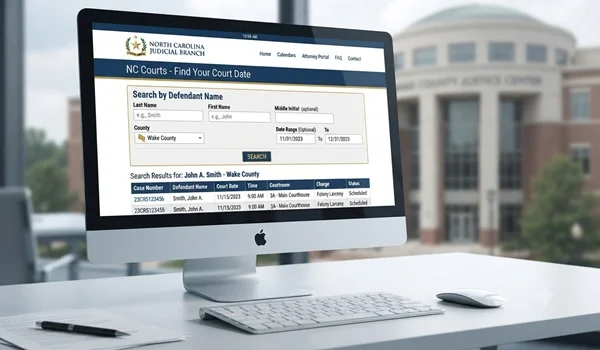
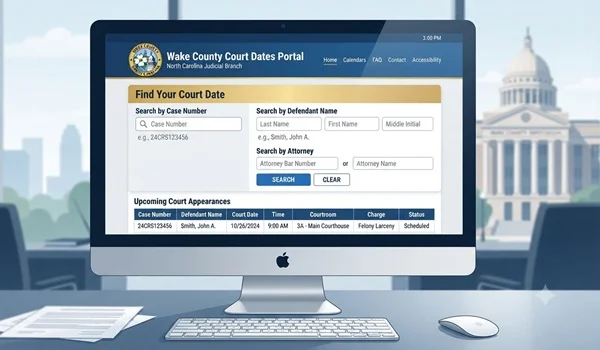
The simplest option is to use the official Find Court Date service from the North Carolina Judicial Branch.
The Judicial Branch states that court dates can be searched using a name, county, date range, and other available information.
When searching for a defendant, enter the name as accurately as possible and review the results carefully.
Search by Defendant Name
A defendant-name search can be helpful when you do not know the case number.
For example, if you are searching for John Smith, you should review the results for additional information such as:
- County
- Court
- Case number
- Hearing date
- Case type
- Party information
This is particularly important for common names because multiple people may have similar or identical names.
Search NC Court Dates Through eCourts Portal
North Carolina’s eCourts Portal provides a broader way to search court information.
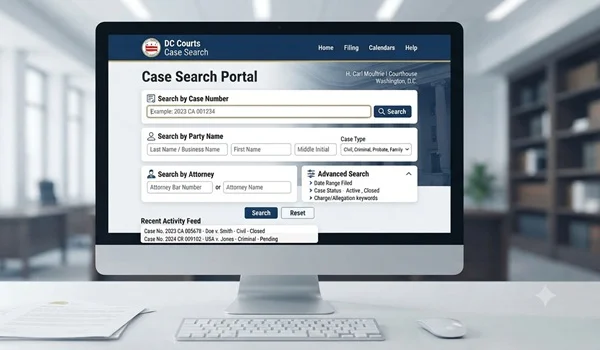
The Portal’s Search Hearings feature allows users to search current court calendars using:
- Party name
- Case number
- Business name
- Attorney name
- Attorney bar number
- Judicial officer
- Courtroom
North Carolina eCourts Portal
The Portal can also provide case information, including case events, dispositions, hearings, and other available public information.
How to Search by Defendant Name
A basic search process is:
- Open the official North Carolina court search.
- Select the appropriate search option.
- Enter the defendant’s or party’s name.
- Select the appropriate county or other available filters.
- Review the search results.
- Compare the case number and other information.
- Check the hearing or court-date information.
If the person has a common name, do not rely on the name alone.
North Carolina Criminal Court Dates
The phrase “defendant” is commonly used when searching for criminal court cases.
A criminal court-date search may help you locate information about:
- Upcoming hearings
- Court appearances
- Criminal case numbers
- Court location
- Case events
- Case status
- Disposition information
The North Carolina Judicial Branch also provides county-level criminal court calendars.
However, a criminal charge does not establish guilt. The final disposition of the case should be reviewed before drawing conclusions about the outcome.
Can You Search by Defendant Name Without a Case Number?
Yes.
North Carolina’s court-date and eCourts systems support searches using names or party information. The eCourts Portal specifically allows searches for hearings by party name.
This makes the system useful when you know the defendant’s name but have not been provided with a case number.
What If the Defendant Has a Common Name?
Common names can produce many search results.
For example, searching for a name such as Michael Johnson could return several different people.
Before identifying a case as belonging to a particular person, compare:
- Full name
- County
- Case number
- Court
- Case type
- Available party information
The North Carolina Judicial Branch also provides name-indexing standards for its eCourts systems.
Can You Search NC Court Dates by County?
Yes.
County information can help narrow your search when you know where the case was filed or where the defendant was charged.
North Carolina’s Judicial Branch provides county-specific court information and calendars, including civil and criminal schedules.
If you know the county, using it along with the defendant’s name can make the search easier.
What Information Can You Find?
Depending on the case and the level of public access, an online search may provide information such as:
- Defendant or party name
- Case number
- Court
- Hearing date
- Hearing time
- Courtroom or location
- Case events
- Case status
- Disposition
- Other available court information
The eCourts Portal provides public access to available court information, although certain records can be confidential, sealed, or otherwise restricted.
Why Can’t I Find a Defendant’s Court Date?
There can be several reasons.
Incorrect Name
A spelling mistake can prevent the correct case from appearing.
Wrong County
The case may have been filed in a different North Carolina county.
Recent Case
A recently filed case or newly scheduled hearing may not yet appear as expected.
Restricted Information
Some court information is not publicly available.
Court Date Changed
A hearing may have been continued, rescheduled, or otherwise changed.
If you cannot find an important court date, contacting the appropriate Clerk of Court is a good way to verify the information.
What If the Court Date Has Changed?
Court dates can change for several reasons, including continuances or court closures.
The North Carolina Judicial Branch advises people whose court session was canceled because of inclement weather to contact the Clerk of Court’s office in the county where they were charged to learn about the local procedure for receiving a new date.
Therefore, do not rely on an old court calendar when an appearance is important.
NC Court Dates vs. Criminal Records
These are not exactly the same thing.
| Court Dates | Criminal Records |
| Focus on scheduled appearances | Focus on criminal-history information |
| Shows hearings and dates | May contain broader history |
| Court-focused | Record/history-focused |
| Useful for upcoming proceedings | Useful for researching past cases |
A court-date search should not automatically be treated as a complete criminal-background search.
Is NC Court Date Information Free?
The North Carolina Judicial Branch provides online public access to court information through its official systems. The exact availability of documents and other services can vary, and certain services may involve fees.
Frequently Asked Questions
Can I search NC court dates by defendant name?
Yes. North Carolina allows users to search court dates and hearings using a person’s name or party name through its official court systems.
Do I need a case number?
No. A case number is helpful, but you can search using the defendant or party name.
Can I search by defendant name and county?
Yes. Using the county along with the defendant’s name can help narrow the search results.
Can I find criminal court dates online?
Yes. North Carolina provides online access to available criminal court calendars and hearing information.
Can I search NC court dates without creating an account?
Public users can search available court information through the eCourts Portal without registering for an account.
What if I cannot find the defendant’s court date?
Check the spelling, county, and other search information. If the date remains unavailable, contact the appropriate county Clerk of Court for verification.
Final Takeaway
Searching NC court dates by defendant name is possible through the official North Carolina Judicial Branch. The Find Court Date service lets users search by name, county, and other information, while eCourts Portal provides a broader hearing search that supports party-name searches.
When researching a defendant, always verify the county, case number, court, and hearing information before assuming that a result belongs to a particular person. For an important legal matter, confirm the current date directly with the appropriate North Carolina court.
Disclaimer: This article is for general informational purposes only and is not legal advice. Court dates and case information can change, and some records may be restricted from public access.